
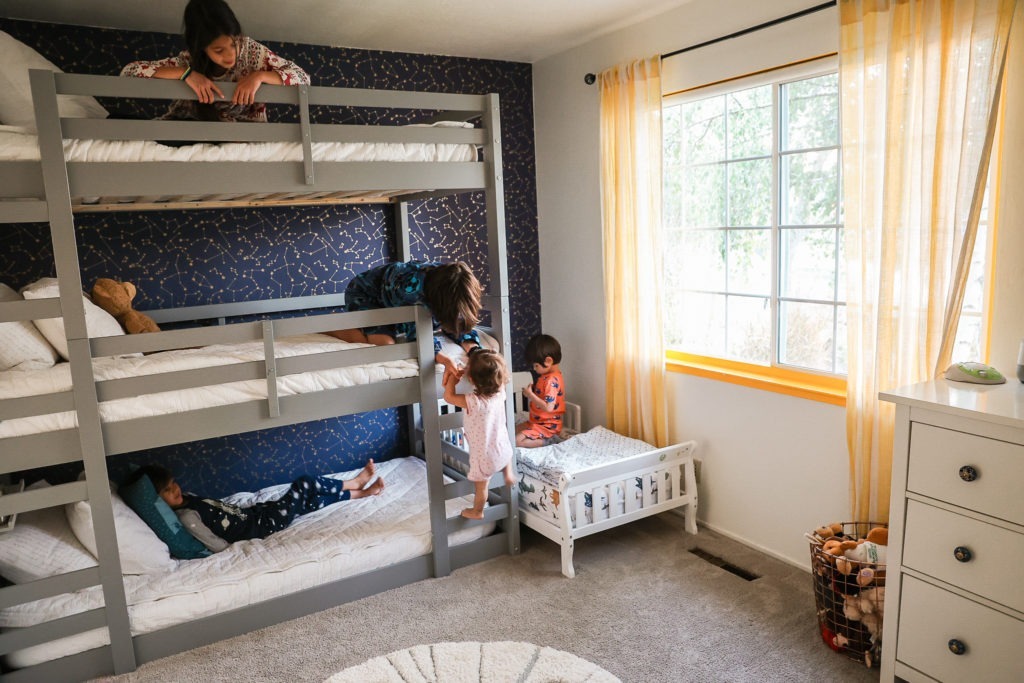
Here’s the thing about open houses. They’re a performance. Counters gleam, floors shine, and every surface the agent walks you past looks like it belongs in a catalog. What that staging doesn’t show you is what’s inside the cabinets, behind the appliances, and tucked into the corners nobody thinks to check during a showing. The second those keys hit your hand, that’s exactly where your attention needs to go, especially with a toddler about to start crawling across every inch of the place.
1. Baseboards and Corners Where Toys Roll
Get down on their level and you’ll see it immediately. Dust, pet hair, and grime collect undisturbed for years right along the floor, right where kids spend most of their time chasing a rolling ball into a corner or building a blanket fort against the wall. That’s not a small concern. Researchers who study childhood exposure have clocked indoor hand-to-mouth contact at anywhere from 7 to 28 times an hour in young kids, according to a peer-reviewed meta-analysis published in the Journal of Exposure Science and Environmental Epidemiology. Their hands land right where that buildup lives, and those same hands end up in their mouths minutes later. A damp microfiber cloth and a little elbow grease pull up more than you’d expect.
2. Cabinet Interiors
Open every single cabinet before a single item goes on a shelf, no exceptions. Previous owners wipe down the doors because that’s what shows during a tour, but the insides rarely get touched, and crumbs, sticky spills, or a mystery stain or two tend to sit forgotten in the back corners for years. Pull every shelf out and give it a real wipe with a mild cleaner. Lower cabinets get the closest look of all, since those are the ones a toddler figures out how to open long before you’re ready, usually while dinner’s on the stove and nobody’s watching.
3. Behind and Under Major Appliances
The space behind the refrigerator is basically a black box to most sellers. Nobody checks it before listing a home, and nobody’s crawling back there during a showing either, so whatever’s collected over the years just stays put until you find it. What’s typically waiting back there.
- Dust bunnies that have had years to grow
- Old food particles and crumbs
- A stray bottle cap, crayon, or utensil from a previous household
- A layer of grease film behind the stove that’s thicker than it looks
Under the stove tells its own story, usually crumbs, grease, and whatever slipped through the burners over years of somebody else’s cooking. Here’s the part that matters most for your family. A crawler will find the one gap behind the fridge and get a hand or a toy wedged in there before you can stop them, and it happens faster than you’d think the first time. Pull the appliances out, clean underneath and behind, and check the coils on the back of the fridge while you’re at it, since a dusty coil makes the whole unit work harder than it should. Push everything back into place once it’s dry.
4. Vents and Air Returns
Quick question. What’s been circulating through your home’s air for the past ten years? Nobody stages a vent for an open house, so the dust and allergens sitting inside have been building for as long as the HVAC system has been running. The EPA notes that children breathe, eat, and drink more in proportion to their body weight than adults do, which is exactly why indoor air quality carries more weight in a house with kids than it does in one without. Pop off the covers, vacuum out what’s inside, wipe down the grates. Do every room, not just the ones with the most foot traffic.
5. Closet Floors and Shelving
Almost nobody opens a closet during a walkthrough beyond confirming it exists. That leaves the floor, the shelving, and especially the top shelf carrying a layer of grime nobody’s dealt with in years. If a closet is about to become a nursery or a playroom storage spot, empty it completely first. Wipe every surface down. Then, and only then, start hanging things up.
6. Window Sills and Tracks
This one’s tedious, but it matters, so don’t skip it. Sills collect dead bugs, dust, and condensation residue, and the tracks underneath sliding windows are worse, since they’re nearly impossible to clean without pulling the screen. In homes built before 1978, windowsills are also a documented hot spot for lead dust left behind by old paint, and the CDC notes that children under six are the most likely to be exposed simply because of how often their hands end up in their mouths. Dr. Eugene Baum, a pediatrician at Yale Medicine, points out that toddlers hit that risk window early. “At 12 months, children have developed a fine pincer grasp,” he told Yale Medicine, describing exactly the age when kids start reaching for whatever’s sitting on a low sill. An old toothbrush beats any specialty tool for the tracks. Twenty minutes, tops.
7. Doorknobs, Light Switches, and Handles
Last on the list, definitely not least important. Doorknobs and light switches sit at exactly the height a toddler’s hand lands on, and the CDC specifically recommends cleaning high-touch surfaces like these more often in households with young children, since kids are more likely to pick up and spread germs than adults. A round of disinfecting wipes across every knob, switch plate, and handle takes fifteen minutes and closes the gap between what looks clean and what really is.
8. Ceiling Fan Blades
Look up. Seriously, look up right now. Nobody staged the top of that fan, and it’s been collecting dust since long before the house went on the market. Every time the fan runs, it flings a fine layer of dust down onto whatever’s underneath, which is a real problem when what’s underneath is a crib, a changing table, or a kid’s bed. Wipe each blade with a damp cloth folded over a pillowcase to catch what falls, working from the fan out and never the other way around.
9. Under the Kitchen Sink
The cabinet under the sink is where a lot of previous owners stashed their cleaning chemicals, and it’s also where pipes sweat, leak, and sometimes grow a little mildew nobody bothered to mention before handing over the keys. Pull everything out first, even if the cabinet looks empty, since a stray bottle or two tends to hide in the back corner behind the pipes. Wipe down the base and the walls with a disinfecting cleaner, paying extra attention to the spot right under the drain trap where slow leaks tend to pool without anyone noticing until the wood underneath starts to warp. Check the pipes themselves for any dampness, rust, or a faint musty smell, all signs a leak has been going on longer than the previous owners let on. Give the whole cabinet a full day to air out and dry completely before anything goes back inside. This is also the spot to install a cabinet lock before it becomes a toddler’s favorite hiding place for pots, pans, and whatever chemicals didn’t get cleared out, since under-sink cabinets are almost always the first place a curious toddler learns to pull open.
10. Light Fixture Globes and Covers
Every ceiling fixture with a glass globe or a frosted cover is a small graveyard of dead bugs that showings never reveal, since nobody’s climbing a ladder during an open house. Unscrew each globe, dump it out, wash it in warm soapy water, and dry it before putting it back. Do this room by room instead of all at once, since this is exactly the kind of job that gets abandoned halfway through if the whole house is on the list at once.
The takeaway here is simple. Unpacking boxes and setting up a nursery already eats a weekend or two on its own, so nobody needs one more thing on their plate. A professional move-in cleaning service can knock out every spot on this list before the first night, which means the only thing left to scrub is your own to-do list.
About the Author


