You turn up the thermostat, hear the furnace kick on, and a few minutes later cold air is still coming through the vents.
That is not always a sign of a major failure. A furnace can briefly push cool air through the ductwork when a heating cycle first starts. But if the air stays cold, or the furnace keeps starting and stopping without warming the house, something is interfering with the heating process.
Sometimes the fix is simple. Other times, the problem involves airflow, ignition, safety controls, or internal furnace components.
Here are six common reasons a furnace may run without delivering the heat you expect.
1. The Thermostat Is Running the Fan at the Wrong Time
The thermostat is the easiest place to start.
If the fan setting is on ON rather than AUTO, the blower can keep running even after the burners have shut off. At that point, it is simply moving room-temperature air through the ducts, which can feel cold coming from the vents.
Switch the fan setting to AUTO and make sure the thermostat is set to HEAT.
It is also worth checking whether the problem began after a thermostat replacement. Incorrect wiring, compatibility issues, or improper setup can affect the way the furnace responds to a call for heat.
If the thermostat settings look right and the furnace still blows cold air, the issue is likely further inside the system.
2. Restricted Airflow Is Causing the Furnace to Overheat
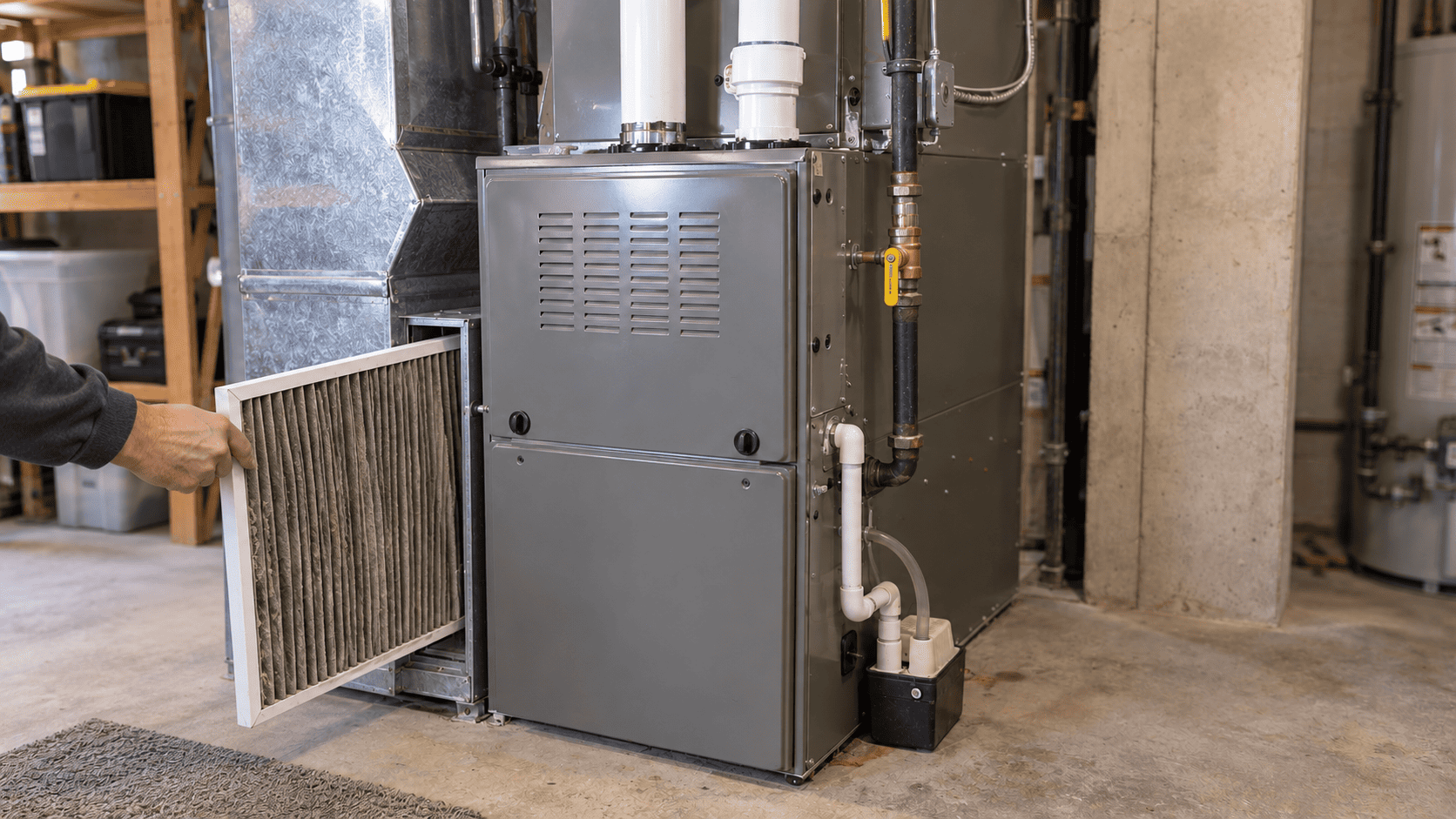
A dirty filter can create more trouble than many homeowners realize.
When the furnace cannot move enough air across the heat exchanger, internal temperatures can rise too high. The furnace may then shut the burners off as a safety measure while allowing the blower to continue running.
From inside the home, that can feel like the furnace suddenly switched from warm air to cold air.
A clogged filter is a common cause, but it is not the only one. Closed registers, blocked return vents, blower problems, or restricted ductwork can also reduce airflow.
Replacing a dirty filter is a reasonable first step. If airflow still feels weak or the furnace keeps shutting down, professional HVAC services can help identify whether the problem is coming from the duct system, blower, or furnace itself.
3. The Flame Sensor Is Shutting the Burners Down
A gas furnace does not simply light the burners and hope for the best. It uses safety controls to confirm that combustion is happening correctly.
One of those controls is the flame sensor.
After the burners ignite, the flame sensor confirms that a stable flame is present. If the sensor is dirty or failing, the furnace may shut off the gas supply even though ignition initially worked.
You may notice the burners lighting normally, then shutting off again after only a few seconds.
The blower can continue to run after that, sending cool air through the home.
Because the flame sensor is part of the furnace’s safety system, repeated ignition shutdowns should be inspected by a qualified technician.
4. The Ignition System Is Not Producing Heat
If the furnace cannot establish a flame, it cannot produce warm air.
Older furnaces may use a standing pilot light. Newer systems usually rely on electronic ignition.
A failed igniter, gas valve issue, damaged pilot assembly, or control problem can prevent the burners from lighting even though other parts of the furnace are still operating.
You may hear the system attempt to start several times without a normal heating cycle beginning.
That is a good point to stop resetting the furnace and arrange heating repair.
Repeated ignition failures can have several causes, and gas-related components should not be handled as a DIY repair.
If you smell gas at any point, leave the area and contact your gas utility or emergency services.
5. A Safety Control or Control Board Is Interrupting the Heating Cycle
Modern furnaces rely on several controls to keep the heating sequence operating safely.
The high-limit switch monitors temperature. The control board manages the inducer motor, ignition system, gas valve, and blower. Other sensors monitor pressure and combustion conditions.
If one of those controls detects a problem, the furnace may stop the burners while allowing the blower to keep running.
The important part is figuring out why the control activated.
For example, a high-limit switch may be doing its job correctly because airflow is restricted. Replacing the switch without fixing the airflow problem would only mask the real issue.
Electrical and control-system faults should be diagnosed rather than guessed at, especially when the furnace is cycling irregularly.
6. The Furnace May Be Reaching the End of Its Useful Life
Sometimes cold-air complaints are not caused by one isolated fault.
An older furnace may begin to develop a pattern of problems: ignition failures, airflow issues, worn controls, blower problems, or repeated shutdowns.
At that point, homeowners may need to compare the cost of ongoing repairs with heating installation.
That decision should take more than the furnace’s age into account.
A technician should also consider the home’s heating load, insulation, ductwork, system efficiency, and whether the existing furnace was sized correctly in the first place.
An oversized furnace can cycle too often. An undersized system may struggle to maintain temperature during colder weather.
A properly selected replacement should match the needs of the home instead of simply copying the capacity of the old unit.
Pay Attention to How the Furnace Behaves
Cold air from the vents is only one clue.
Notice whether the burners shut off quickly, whether airflow feels weak, whether the furnace keeps restarting, or whether the blower runs much longer than usual.
Those details can help narrow down the cause.
A thermostat or filter issue may be simple enough to check yourself. Problems involving gas, ignition, electrical components, flame sensing, or safety controls should be handled by a professional.
If your furnace is struggling to heat your home consistently, H & H Heating & Air Conditioning can inspect the system, identify the cause, and recommend the right repair or replacement option for your home.
About the Author